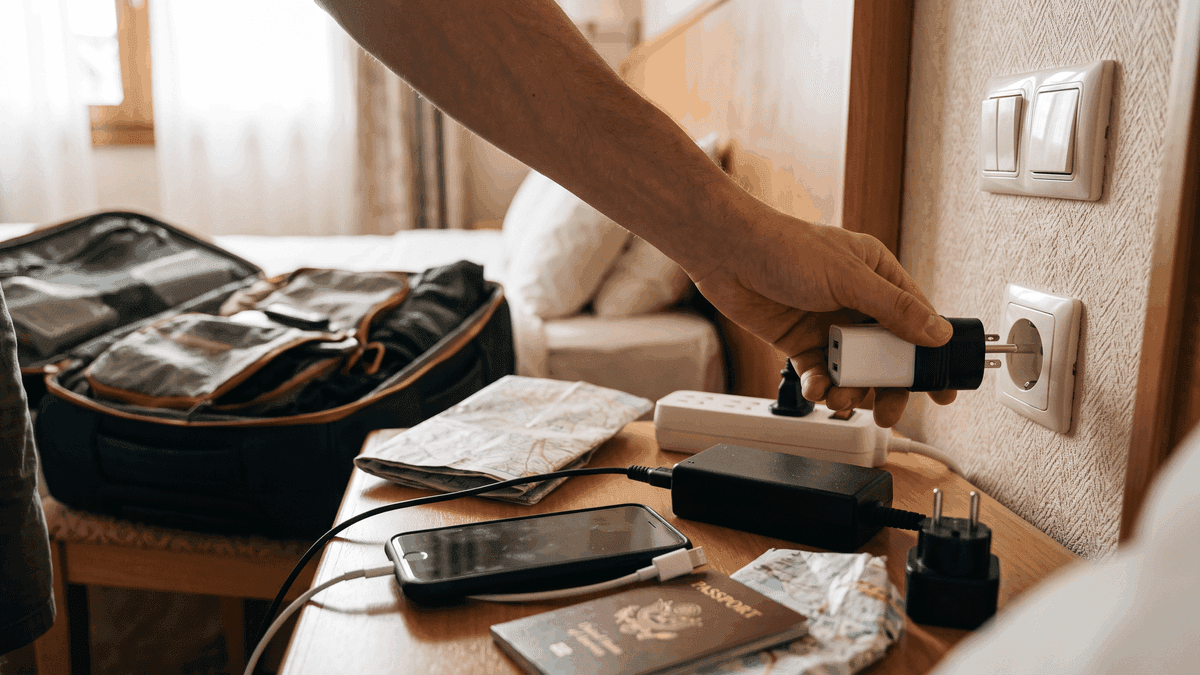
Falling sick abroad costs you up to $50,000 or more in medical evacuation bills if you rely on domestic health insurance instead of a comprehensive policy. Let's be real—nothing ruins a three-month digital nomad stint quite like spiking a 104-degree fever in a country where you don't even know the word for "painkiller." When your appendix decides to stage a coup in downtown Bangkok or you pick up a rogue parasite in Oaxaca, you aren't just fighting an illness. You're fighting bureaucratic red tape, strange billing systems, and a linguistic wall that makes ordering street food look like a walk in the park. But falling sick abroad doesn't have to mean bankruptcy or a catastrophic medical disaster if you know how to navigate the system before the room starts spinning.
TL;DR
- Buy comprehensive coverage: Secure a policy with medical evacuation before leaving, as domestic health insurance rarely covers international care.
- Translate your medical history: Carry a written record of your allergies and generic prescription names translated into the local language.
- Know your emergency contacts: Save local embassy numbers, offline translation tools, and high-limit credit cards for hospital deposits.
- Choose the right facility: Opt for private hospitals for speed and English-speaking staff, but use public emergency rooms for critical trauma care.
The Financial Reality of Healthcare Overseas
Healthcare abroad can either cost you the price of a fancy dinner or the deposit on a house, depending entirely on how you pre-gamed your trip. According to the US State Department, comprehensive travel insurance including medical evacuation is essential, as standard domestic health insurance rarely covers medical care or emergency transport abroad. If you think your employer's health plan or basic credit card insurance is going to airlift you out of a rural province when your lungs fill with fluid, you're in for a very expensive rude awakening. To ensure you stay financially secure while living abroad, it pays to understand your financial safety net, much like setting up the best multi currency account apps compared to handle sudden foreign transactions without losing money on conversion fees.
Financial Risk Factors
- Standard domestic policies treat international borders like a hard stop for coverage.
- Medical evacuation alone can easily eclipse $50,000 out-of-pocket if you're stranded in a remote zone.
- Out-of-pocket cash payments in countries like Thailand or Spain are often surprisingly cheap for minor ailments, but catastrophic care requires a safety net.
- Relying on basic credit card coverage without checking fine print leaves you financially exposed to foreign hospital bills.
| Coverage Type | Typical Domestic Policy | Comprehensive Travel Insurance |
|---|---|---|
| Routine Outpatient Care | Rarely Covered | Fully Covered (up to limits) |
| Emergency Hospitalization | Rarely Covered | Fully Covered |
| Emergency Medical Evacuation | Never Covered | Covered (often up to $250k+) |
| Direct Hospital Billing | No | Yes (with pre-approval) |
Top 5 Ways to Prepare Before You Need a Doctor
Preparation is the only thing standing between you and a complete meltdown in a foreign emergency room. Do these tasks before your next flight. When picking your next destination, always check local medical infrastructure alongside general expenses, especially if you are evaluating top geoarbitrage hotspots for your next remote work base.
Digital and Physical Medical Dossier
The CDC recommends that international travelers carry a written copy of their medical history, current prescriptions with generic names, and specific allergy information translated into the local language. Brand names change wildly across borders—what's called Tylenol in the US might be sold under an entirely different name and dosage concentration in Europe or Asia. Using generic drug names prevents lethal confusion.
- Keep a laminated card in your wallet detailing critical allergies.
- Store digital copies of your complete medical history in an encrypted cloud folder like 1Password or Google Drive.
- Have Google Translate offline language packs downloaded for your destination before you board.
- Write down current prescriptions using universal generic names rather than local brand labels.
Embassy and Consulate Speed-Dial
When things go sideways, your home country's diplomatic outpost is your best friend—even if they usually just issue passports. Many international embassies and consulates maintain updated lists of English-speaking doctors, medical facilities, and hospitals in foreign countries. They won't pay your medical bills, but they can steer you away from sketchy clinics that overcharge foreigners and point you toward trusted private hospitals.
- Save the local embassy's emergency phone number in your contacts.
- Check the US State Department Emergencies Abroad portal before departing.
- Register with your government's traveler enrollment program (like STEP for US citizens) for crisis alerts.
- Verify operating hours and emergency contact channels for your nearest consulate.
Choosing the Right Credit Card for Medical Emergencies
When a hospital demands an upfront deposit before they'll wheel you into a room, your standard checking account debit card might trigger a fraud block or hit daily withdrawal limits. You need a high-limit travel credit card with zero foreign transaction fees.
- Cards like the Chase Sapphire Preferred offer built-in travel interruption and emergency assistance.
- Ensure your card has a sufficient credit limit to absorb a sudden $5,000 hospital deposit.
- Notify your bank of extended travel to avoid sudden card freezes.
- Keep a secondary backup card stored separately from your primary wallet.
Translation Apps and Offline Tech
Google Translate is fine, but medical terminology requires precision. If you try to explain a "throbbing migraine with aura" using basic conversational translation apps, the triage nurse might think you're having a psychotic break.
- Download specialized medical translation apps or bilingual PDF glossaries.
- Keep a portable power bank charged so your translation device doesn't die mid-diagnosis.
- Consider using apps like Airalo for instant local data connectivity the moment you land.
- Save offline bilingual medical dictionaries for immediate access without internet.
The Emergency Cash Stash
Even with top-tier insurance, some clinics in developing nations operate strictly on a cash-up-front basis before they administer treatment or dispense discharge medications. Relying entirely on digital banking apps is a rookie mistake.
- Always carry the equivalent of $300 to $500 USD in local currency hidden in your luggage.
- Keep backup cards stored separately from your primary wallet.
- Know the location of 24-hour ATMs near your accommodation.
- Store emergency cash in small, accessible denominations for quick transactions.
What to Do When You Arrive at the Hospital
Walking through those sliding glass doors is terrifying, but your composure dictates how you'll be treated. First, take a breath. Private hospitals in expat hubs (like Bumrungrad in Bangkok or Hospital Samaritano in São Paulo) operate more like five-star hotels than sterile institutional nightmares. Public hospitals, however, require aggressive self-advocacy. If you are comparing comprehensive policies before your departure, checking a dedicated nomad health insurance guide can clarify what exclusions to look out for.
Triage and Admission Steps
- Present your comprehensive travel insurance policy documentation immediately.
- Demand an English-speaking coordinator or use your offline translation app to request one.
- Never hand over your original passport as collateral—offer a photocopy or a credit card deposit instead.
- Confirm all estimated treatment costs in writing before agreeing to non-emergency procedures.
Pros and Cons of Private vs. Public Healthcare Abroad
When illness strikes, you often have to choose between speed and cost.
Private Healthcare Assessment
- Private Hospitals Pros: Fast wait times, English-speaking staff, modern equipment, private rooms.
- Private Hospitals Cons: Astronomical out-of-pocket costs if uninsured, aggressive upselling of unnecessary tests.
Public Healthcare Assessment
- Public Hospitals Pros: Fraction of the cost, exceptionally high standard of emergency trauma care in many countries.
- Public Hospitals Cons: Overcrowded waiting rooms, severe language barriers, bureaucratic delays, sparse creature comforts.
Bottom Line
- Buy comprehensive travel insurance—including medical evacuation—before you leave home, as recommended by the US State Department.
- Carry a translated medical history and generic prescription list as advised by the CDC.
- Keep embassy contact lists, high-limit credit cards, and offline translation tools ready.
- Verify your emergency funding and credit limits before boarding your flight.
FAQ
Will my domestic health insurance cover me if I get sick abroad?
Almost certainly not. Standard domestic health insurance policies draw a hard line at national borders. Unless you purchased a specific international rider or comprehensive travel medical plan, you are paying out of pocket.
How do I find an English-speaking doctor in an emergency?
Check the local US embassy or consulate website for updated directories of vetted English-speaking medical facilities. Alternatively, major private international hospitals in urban centers almost always employ multilingual staff.
Should I go to a public or private hospital?
If it is a life-threatening emergency, go to the nearest hospital regardless of type. For non-life-threatening illnesses, private hospitals are typically faster and easier to navigate for non-locals, though public options are much cheaper if you are uninsured.
Sources
- US State Department Travel Insurance
- CDC Getting Health Care Abroad
- US State Department Emergencies Abroad