A single episode of severe food poisoning in a remote corner of Southeast Asia can easily set you back $300 in unexpected clinic fees and ruined itinerary days. Let's be real—buying blister packs of mystery antibiotics at a pharmacy where nobody speaks English is not an adventure; it's a financial and medical disaster waiting to happen. Building a proper first aid kit for long-term travel isn't about packing an entire emergency room into your Osprey backpack. It's about smart geoarbitrage of your health: spending $40 upfront on quality supplies to dodge four-figure medical bills later.
TL;DR
- Pack smart: Build a custom first aid kit to dodge costly foreign clinic bills and ruined travel days.
- Protect prescriptions: Always carry 150% of your required medication in original containers alongside a doctor's clearance letter.
- Tailor to terrain: Match your medical gear to regional health hazards, whether that means altitude pills or oral rehydration salts.
- Secure claims: Ensure you know how to file an international health insurance claim abroad if minor clinic visits escalate into major medical expenses.
The Core Wound Care Essentials
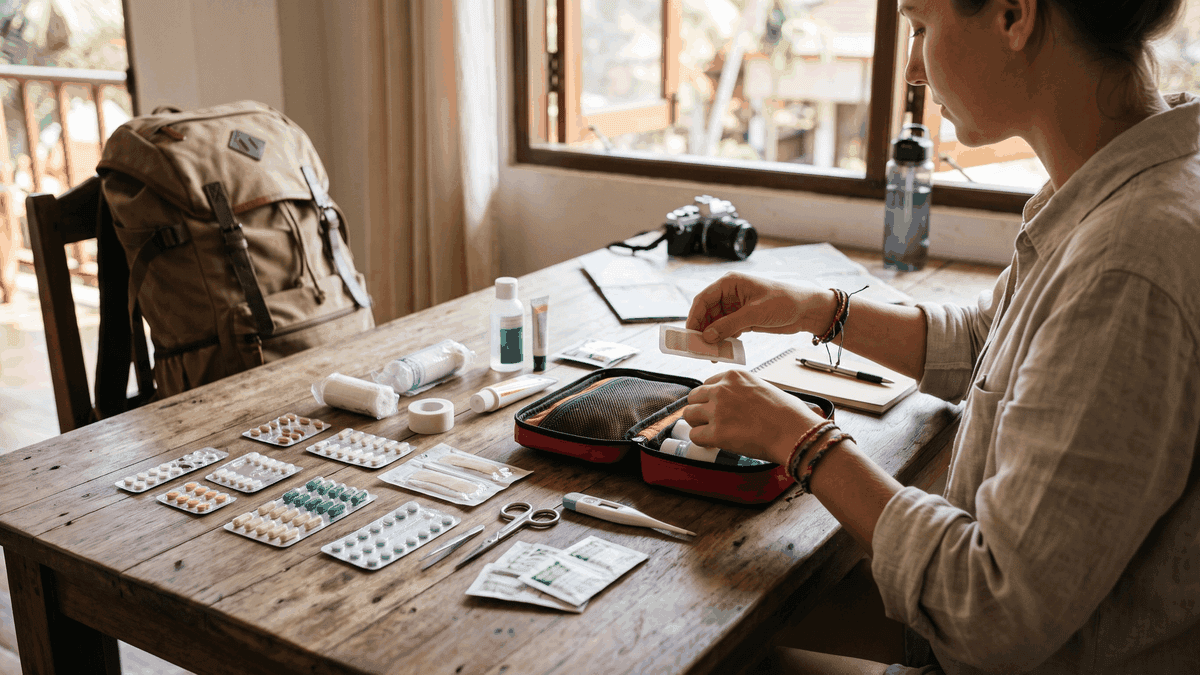
Adhesive bandages, gauze, elastic bandages, antiseptic, tweezers, and tape form the holy trinity of keeping minor scrapes from mutating into tropical flesh-eating nightmares. When you're six months deep into a nomadic stint, a simple gravel slide on a scooter or a rusty hostel bunk frame can turn a great Tuesday into a tetanus booster requirement.
According to the CDC, a travel health kit must include bandages, elastic bandages for sprains, and gauze pads or non-stick dressings for larger wounds (as of 2026). Don't skimp on the medical tape, either—cheap tape rolls will sweat off your skin the second you step foot into a humid bus terminal.
Essential Wound Supplies
- Heavy-duty fabric adhesive bandages in assorted sizes
- Sterile gauze pads and non-stick dressings for larger cuts
- Elastic compression bandages for twisted ankles on cobblestones
- Precision metal tweezers for splinter and thorn extraction
- Medical-grade waterproof tape that actually sticks when you sweat
Prescription Meds and Red Tape
The taxman might be annoying, but international customs agents searching your bag for unlabelled pills are a whole different breed of bureaucratic headache. If you take regular maintenance drugs, you need a bulletproof strategy to keep your health intact while crossing borders without getting locked in a holding cell.
Johns Hopkins Medicine recommends bringing enough regular prescription medicine for the full trip plus extra in case return is delayed, along with bandages, antibiotic ointment, and alcohol-based hand cleaner containing at least 60% alcohol (as of 2026). Failing to secure your paperwork can lead to confiscation at the border, leaving you stranded without critical medication.
Customs and Prescription Rules
- Always carry medications in their original, labeled pharmacy containers
- Secure a formal doctor's letter detailing the generic names of all drugs
- Pack 150% of your projected dose to survive unexpected flight cancellations
- Cross-check local destination laws regarding banned substances like codeine or stimulants
Destination-Specific Pharmas and Defenses
Travelers should customize their medical kits based on their destination's specific health risks, such as carrying altitude sickness medication for high-elevation treks or oral rehydration salts for tropical climates (as of 2026). Packing the exact same kit for a ski season in the Chilean Andes as you would for a beach bum tour of Thailand is a rookie mistake.
For long-term travelers taking prescription medications, it is critical to carry an adequate supply in original, labeled containers along with a doctor's letter detailing the generic names of the drugs to clear international customs smoothly (as of 2026). Preparation here saves you from frantically searching for a doctor who writes prescriptions in a language you only understand via Google Translate.
Terrain-Specific Additions
- Acetazolamide for high-altitude mountain regions above 2,500 meters
- Oral rehydration solution packets to fight dehydration from tropical stomach bugs
- DEET-based insect repellent and permethrin-treated clothing for malaria zones
- High-SPF broad-spectrum sunscreen to prevent desert and tropical burns
Gastrointestinal Armor and Water Safety
Travelers' diarrhea will happen to you. It's not a matter of if, but when you'll stare at a restaurant ceiling questioning every life choice that led you to eat street meat. Out-of-pocket costs for clinical visits can skyrocket when you're far from major metropolitan centers.
Including broad-spectrum antibiotics and a basic water purification method in a long-term travel medical kit can mitigate out-of-pocket costs and health risks associated with severe travelers' diarrhea (as of 2026). Pair those heavy-hitters with loperamide and basic electrolyte replenishment.
Gut-Check Arsenal
- Broad-spectrum antibiotics prescribed specifically for travel-acquired bacterial bugs
- Loperamide for emergency situations when you absolutely must board a 12-hour bus
- Chlorine dioxide tablets or a micro-filter straw for sketchy tap water
- Pepto-Bismol chewables for mild indigestion and early-stage symptoms
| Kit Component | Standard Travel Kit | Long-Term Nomad Kit | Budget Impact |
|---|---|---|---|
| Wound Care | Basic band-aids | Gauze, tape, wraps, tweezers | $15 - $25 |
| Rx Supplies | Exact trip length | 150% supply + doctor letter | Varies by drug |
| Gastro Defense | Pepto-Bismol | Antibiotics + ORS packets | $30 - $50 |
| Diagnostics | None | Digital thermometer | $10 - $15 |
Pros and Cons of DIY Kits vs. Pre-Made Packs
Building your own kit gives you total control over expiration dates and active ingredients, but buying a pre-packaged medical pouch saves you running around to three different pharmacies. As you assemble your broader packing list alongside gear like long-stay travel gear essentials, prioritize modularity so your medical supplies remain easy to isolate in an emergency.
DIY Kit Comparison
- DIY Kit Pros: Complete customization, cheaper unit cost, high-quality components tailored to your exact body.
- DIY Kit Cons: Time-consuming to assemble, requires basic medical knowledge to stock correctly.
- Pre-Made Kit Pros: Instant out-of-the-box readiness, compact designated pouches, great starting baseline.
- Pre-Made Kit Cons: Often packed with filler items you'll never use, lower-quality bandages that peel off instantly.
Bottom Line
- Building a proper long-term travel medical kit is cheap insurance against exorbitant foreign clinic bills and ruined itineraries.
- Customize your gear based on regional threats like altitude sickness or tropical pathogens.
- Never travel internationally without original pharmacy packaging and a doctor's clearance letter for prescriptions.
- Keep your kit compact, accessible, and inspected every six months for expired components.
FAQ
Do I need a doctor's prescription for travel antibiotics?
- Yes, legitimate broad-spectrum antibiotics require a prescription from a travel clinic or your primary care physician before departure.
- Do not attempt to buy unregulated antibiotics online from unverified foreign vendors.
- Always discuss potential side effects with your prescribing travel medicine doctor.
How do I keep medications from spoiling in hot climates?
- Keep your first aid kit out of direct sunlight and away from damp bathroom environments.
- If you're visiting tropical zones, store temperature-sensitive drugs in insulated medication travel pouches.
- Monitor pills regularly for signs of melting, discoloration, or degradation.
Can I pack liquid medicines in my carry-on bag?
- Prescription medications are generally exempt from the strict 3-100ml liquid limits.
- You must declare them to security screening personnel before passing through checkpoints.
- Always present supporting documentation or a doctor's letter to verify your medical needs.
Sources
- CDC Travel Health Kits Guide
- Smartraveller Health Preparedness
- International Society of Travel Medicine
- Johns Hopkins Medicine First Aid Guide